Rebuilt Livelo's campaign email system from image files to a modular, code-driven infrastructure
What looked like an email redesign project was really an operational one — standardisation, automation, partner approval, and agency workflow. The templates were the output; the system was the work.
Livelo’s campaign emails were image files — the whole email, one flat export. No responsive behaviour, no reusable structure, no way to feed them with dynamic content. I came in after an audit, and left with a system.
Executive Snapshot
The Situation
Livelo — a loyalty points platform owned by Banco do Brasil and Bradesco — ran campaigns on full-image emails. Unresponsive, heavy, slow to produce, and impossible to feed with dynamic data.
The Work
A full rebuild: responsive HTML templates coded in FoundationMail, a modular component structure, animated banner variants, multi-provider testing, and BI automation integration discovered mid-project.
The Outcome
70% reduction in production time. 10% delivery rate improvement. 5% conversion increase on recurring campaigns. Auto-approval from both bank owners. BI automation unlocked as a downstream benefit.
Context & Starting Point
Livelo is one of Brazil’s largest loyalty programs, co-owned by Banco do Brasil and Bradesco. I joined as a contractor after an email audit flagged issues across the board, and was put in charge of the fixes.
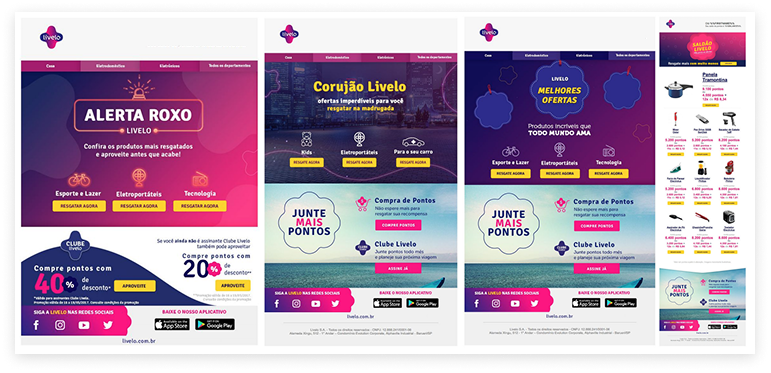
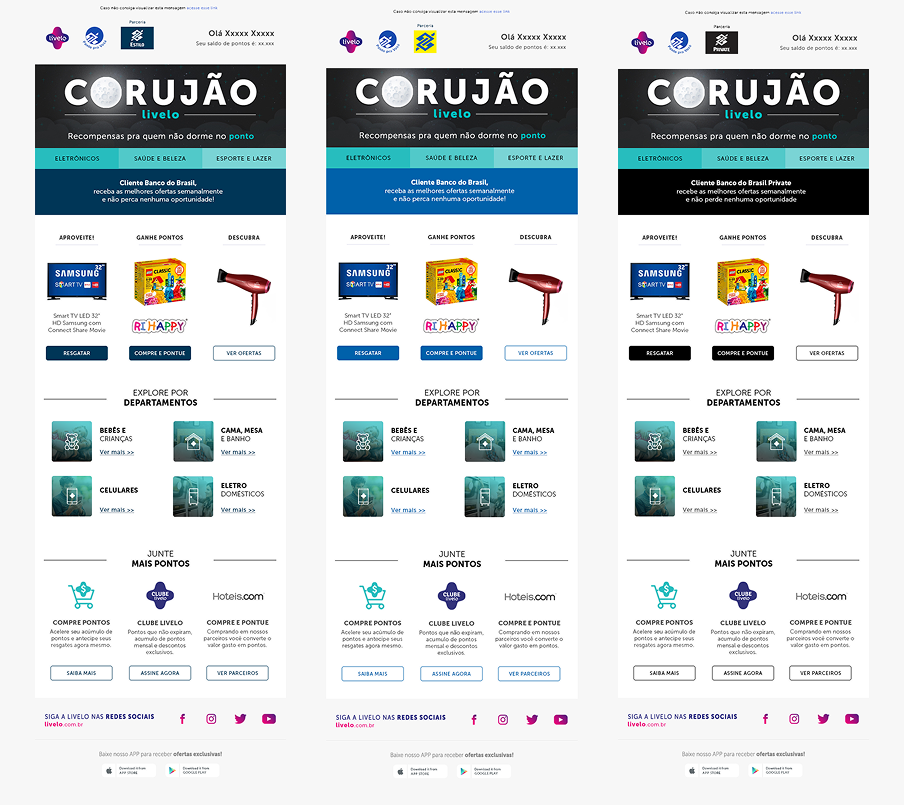
The recurrent campaigns — Achados, Saldão, Corujão, Alerta Livelo — were dense and visually noisy, with oversized static banners that triggered banner blindness before users could register what they were even about. Points Transfer was harder: three distinct mechanics, each tied to a different partner (Smiles, Dotz, and others), each needing its own email. Difficult to explain to fellow designers, let alone to someone quickly scanning their inbox.
Underneath both: flat image files, start to finish. No HTML text, no responsive behaviour, nothing modular. Every campaign was a rebuild. Segmentation was manual. And any tweak meant going back through approvals at two major banks.
Phase 1 — Recurrent Campaign Emails
The right place to start, given how often they went out. Any improvement here would pay off across every send.
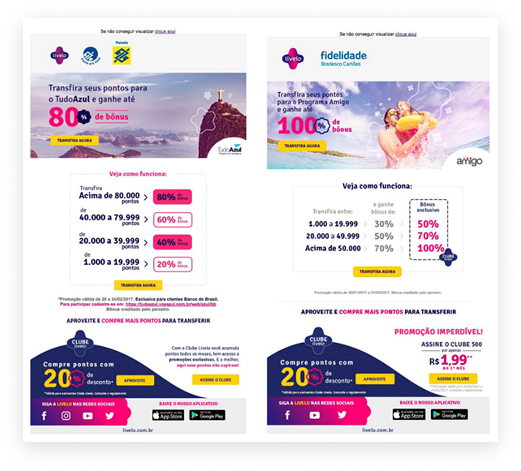
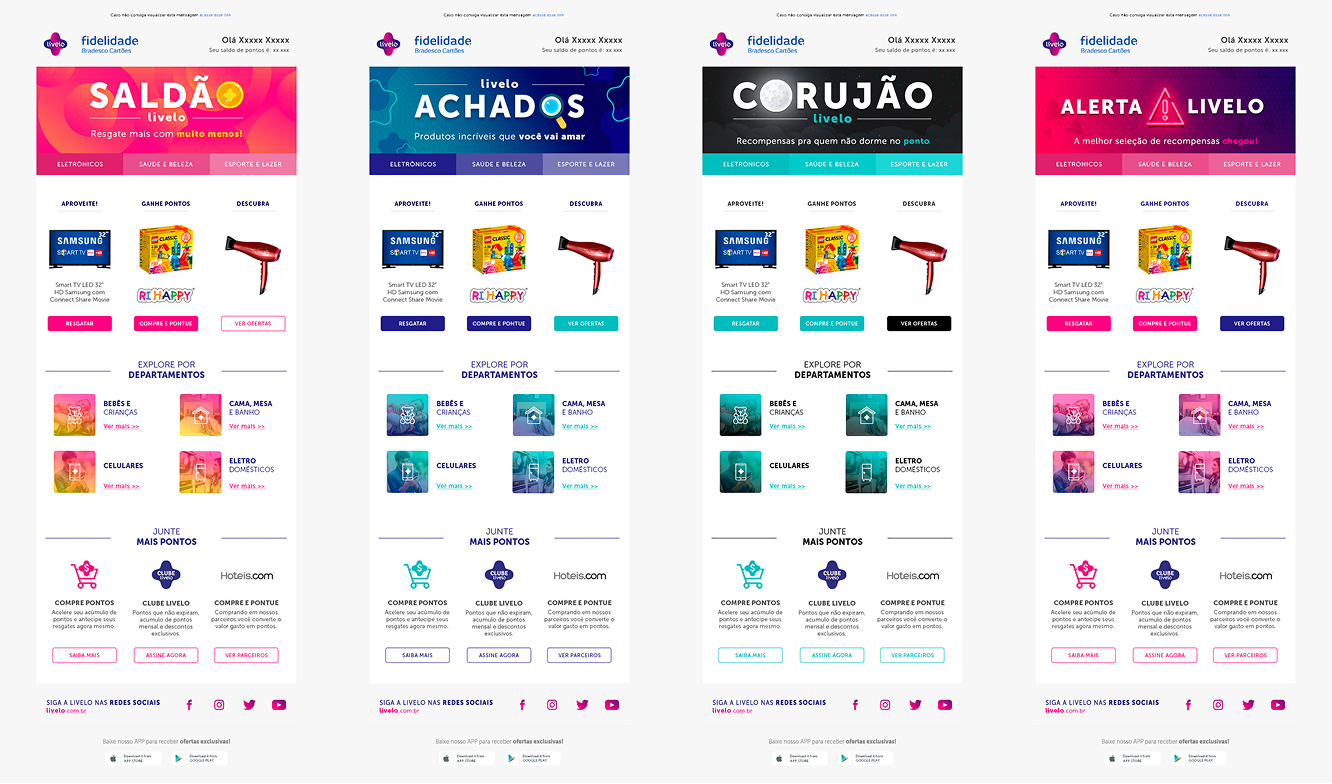
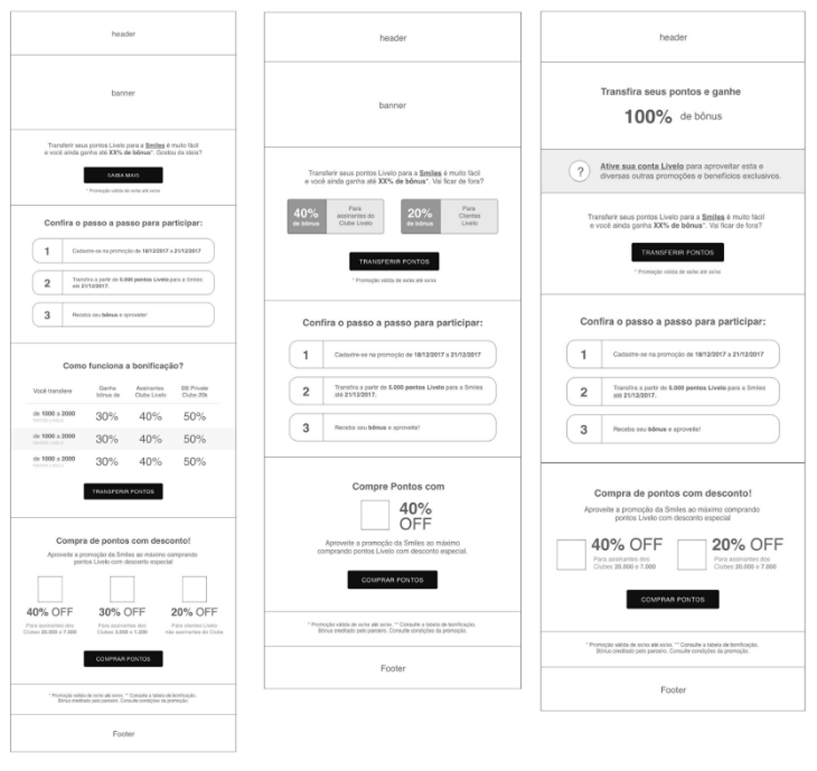
The template was wireframed as a set of modular blocks: assemble per campaign, don’t rebuild. I coded it in FoundationMail, covering responsive behaviour, dark mode edge cases, and rendering quirks across Gmail, Outlook, and mobile clients.
The banners were a separate problem. Replacing the static hero images with shorter animated GIFs did two things: it gave the eye something to land on instead of scroll past, and it brought file sizes down enough to move the needle on delivery rates.
Phase 2 — Points Transfer Emails
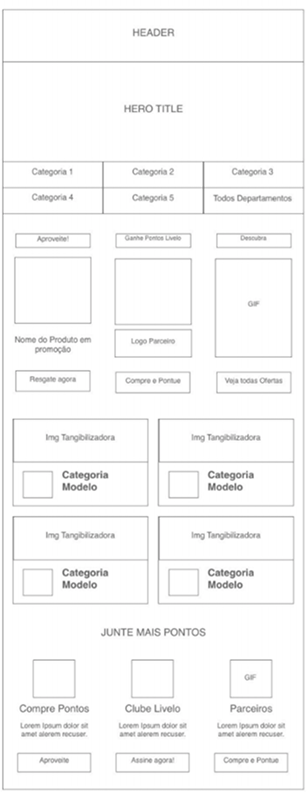
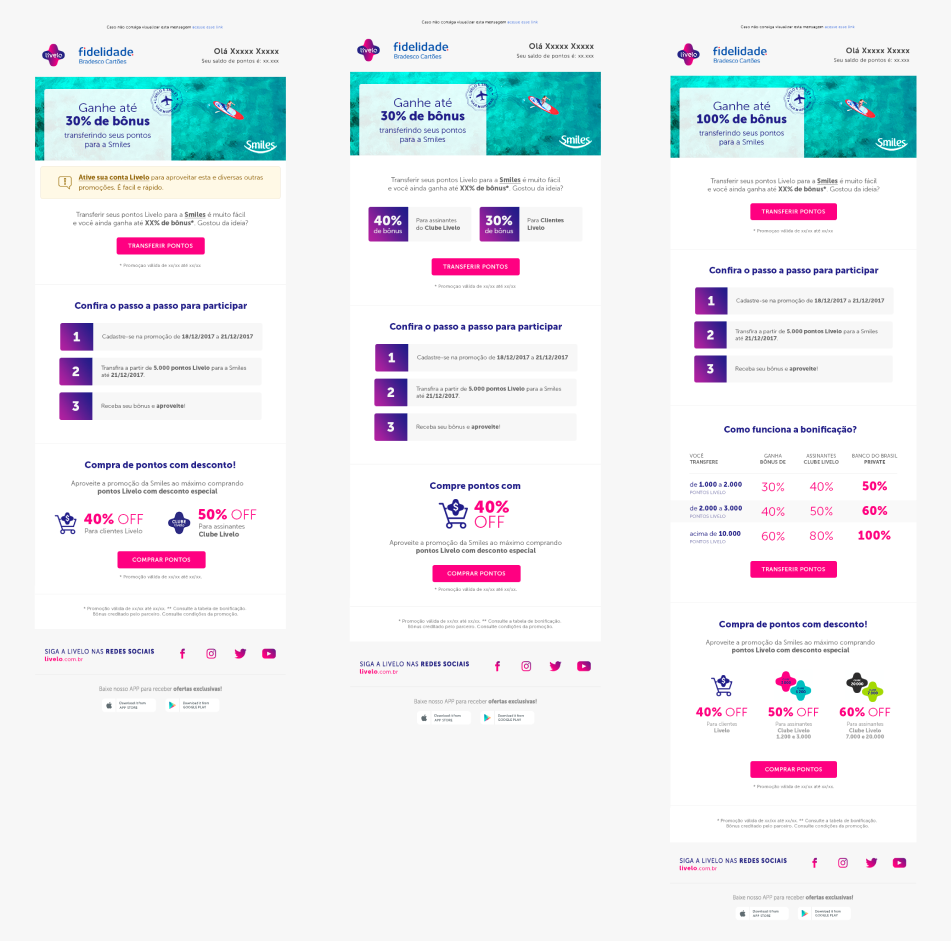
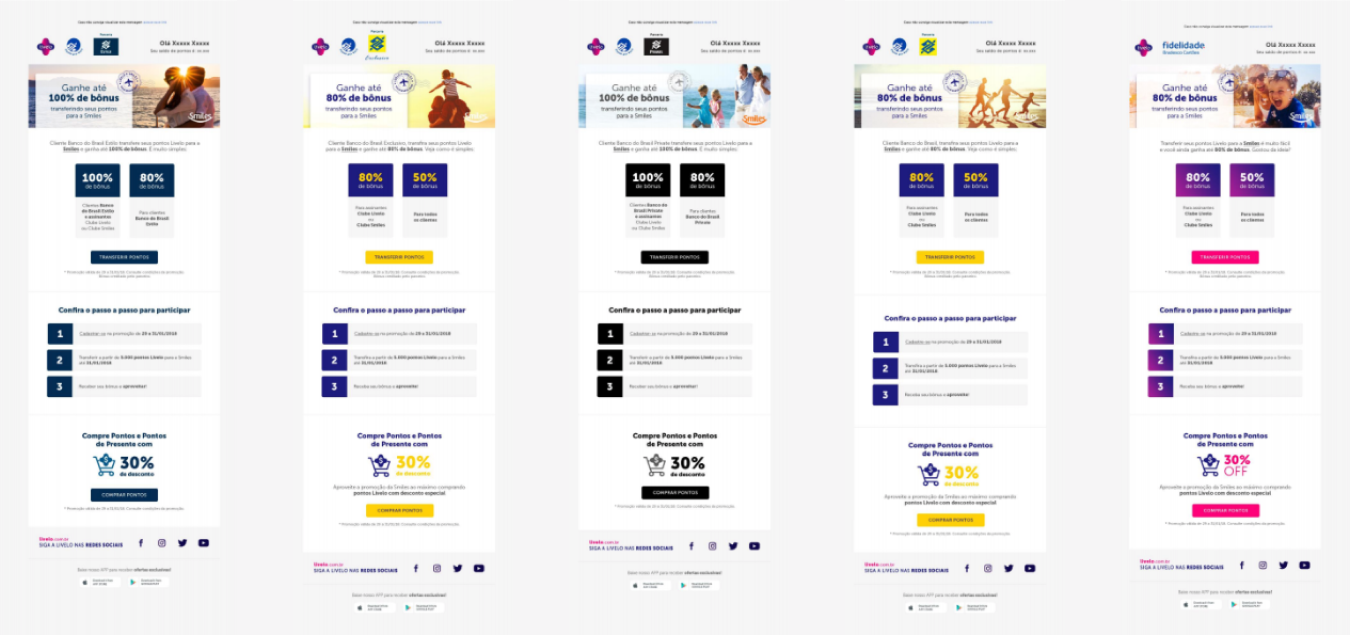
Points Transfer was triggered differently — sent when a transfer happened, not on a campaign schedule — but it reused the same template foundations. The main design challenge was clarity: three partner mechanics, three visual identities, each needing to feel distinct while staying within the same system.
BI Automation — An Unplanned Outcome
Nobody asked for this. Midway through, the manager noticed that the new templates — actual HTML with modular content blocks — could take dynamic data in a way the old flat images never could. We ran with it: I worked with the web dev to wire BI logic into the template code, mostly for product suggestion blocks that could now be personalised per segment automatically.
It came out of doing the underlying work properly, not from planning for it.
Impact
- 70% reduction in in-house design time — modular structure, no complex segmentation per campaign, partner auto-approval flow
- 10% improvement in delivery rates — responsive HTML replacing full-image files, reduced file size from animated banners
- 5% conversion increase on recurring campaigns — shorter animated banners countered banner blindness and reduced file size
- BI automation enabled — dynamic product suggestion blocks, unlocked as a structural byproduct
- Partner approval streamlined — Banco do Brasil and Bradesco sign-off built into the modular system, removing the per-campaign bottleneck
- Agency briefing simplified — documented modular structure made it straightforward to brief external agencies on variants
Key Learning
The brief was visual. The problem was operational.
The audit flagged rendering issues and visual inconsistency. But the real blocker wasn’t how the emails looked — it was that there was nothing underneath them. Every campaign was a one-off. Nothing could be reused, automated, or approved without going through the banks again. Cleaning up the visuals without fixing that would have changed very little. The templates were the output. The system was the actual work.